

long non-coding RNA knockdown
AUMlnc
Self-delivering antisense oligonucleotides for long non-coding RNA knockdown
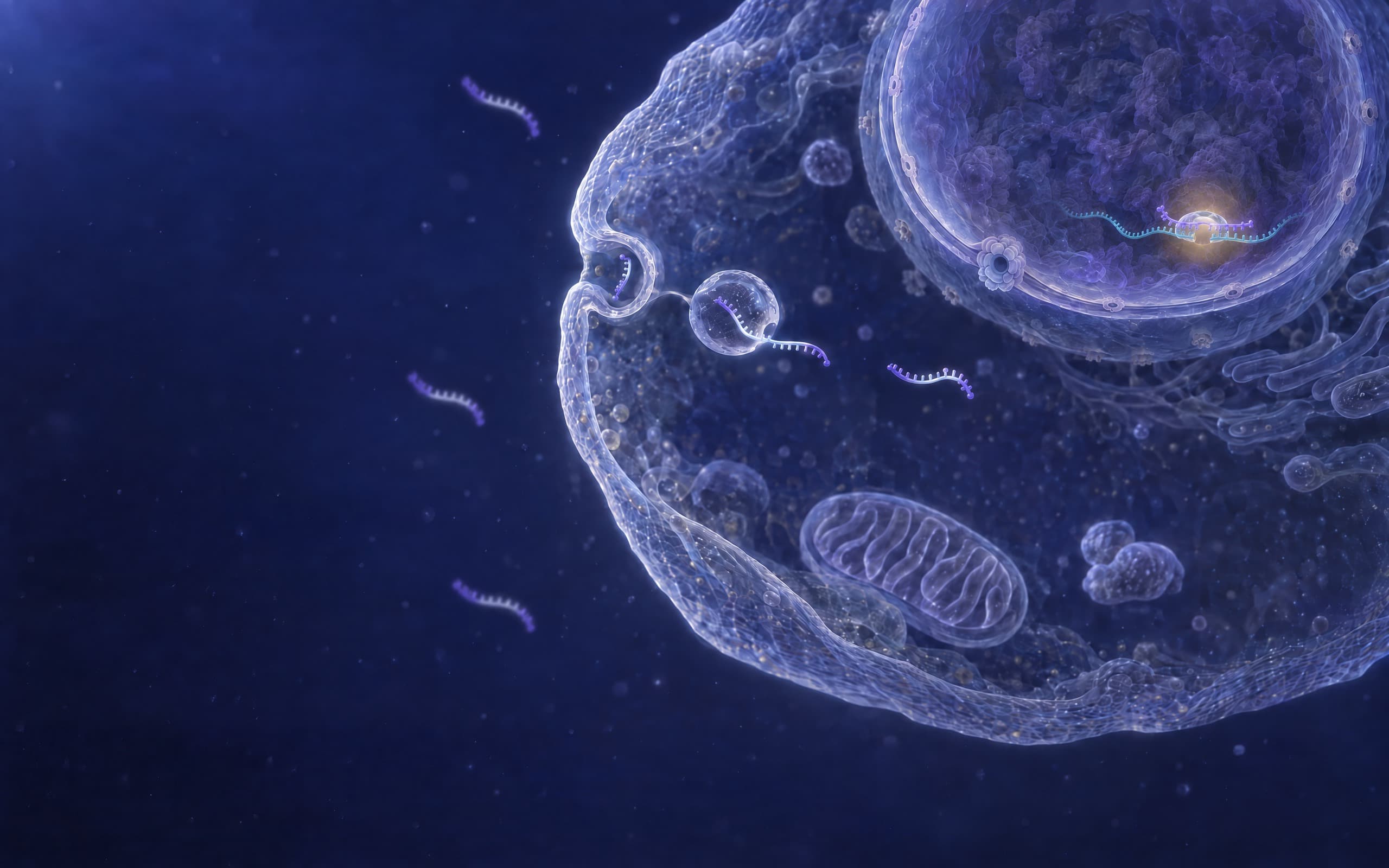
AUMlnc
AUMlnc
- Knockdown in cells and in animals
AUMlnc
sdASO silences lncRNAs in cells and in animals. - Cleavage in the nucleus
AUMlnc
sdASO reaches the nucleus, where many lncRNAs act, so a nuclear transcript is cleaved rather than only blocked. - High specificity for lncRNA sequence
AUMlnc
sdASOs can be designed to target unique regions of the lncRNA, because lncRNAs often belong to gene families or have repetitive elements. - No need for genetic manipulation
AUMlnc
sdASO offers a non-genetic, reversible approach to lncRNA knockdown.
Yields and purification
- RPC
- 10 · 25 · 50 · 100 nmol
- HPLC
- 25 · 50 · 100 nmol
- Labeled, HPLC
- 10 · 25 · 50 · 100 nmol · FAM, Cyanine 3, Cyanine 5, Cyanine 7
Prices and lead time are on the order page. Custom yields by quote.
At a glance
- Class
- Self-delivering antisense (sdASO)
- Targets
- lncRNA knockdown
- Delivery
- Add to culture medium or inject in vivo.
- Fluorescent label
- FAM, Cyanine 3, Cyanine 5 or Cyanine 7
In the lab
The protocol in four steps
The steps below are the AUMlnc
Step 1
Cell preparation
Plate cells in their optimum growth medium at a density appropriate for the cell type. A confluency of 50-70% at the time of treatment is typical.
Step 2
AUMlnc
sdASO stock preparation Prepare AUMlnc
sdASO stock solution by reconstituting lyophilized ASOs at the desired concentration. If you already have a stock solution prepared, skip to Step 3. Step 3
AUMlnc
sdASO delivery to cells Add AUMlnc
sdASO to the cells at the desired final concentration. The recommended working range is 5-20 μM, with a starting concentration of 10 μM. The optimal concentration varies with the target gene, the RNA class (messenger RNA, microRNA or long non-coding RNA) and the cell type, and should be determined by titration for each system. Step 4
Incubation and analysis
Incubate cells with AUMlnc
sdASO and analyze knockdown at appropriate time points. Knockdown is typically observed 24 to 72 hours after treatment, depending on the cell type and the target gene. Longer time points may be required in some systems.
In vitro, the four steps
Step 1
Prepare cells
Seed the cells in a 24-well plate; the oligonucleotide waits in solution.
Step 2
Add to the medium
Add the self-delivering oligonucleotide straight to the medium: no transfection reagent, no carrier.
Step 3
Incubate
Incubate at 37 degrees C in 5% carbon dioxide, humidified, for the exposure time.
Step 4
Quantify knockdown
Measure the knockdown: RT-qPCR, immunoblot, flow cytometry.
Schematic of the three readouts, not data.
Notes
- The pictures are the object pictures of AUM BioTech's workflow slide, rendered views of the objects on a white ground. None is a photograph of an experiment and none records a measurement.
- Tile 04 is a schematic of the three readouts, not data. The two conditions are drawn with a modest difference to show what each readout is, and no magnitude is asserted.
Why
Features of AUMlnc
Knockdown in cells and in animals
AUMlnc
sdASO silences lncRNAs in cells and in animals. Historically, lncRNAs have been challenging to study because of the lack of tools to perturb them. Whether the lncRNA acts in cis (nearby on the DNA) or in trans (far away in the cell), AUMlnc sdASO is designed against the lncRNA itself. Cleavage in the nucleus
AUMlnc
sdASO reaches the nucleus, where many lncRNAs act, so a nuclear transcript is cleaved rather than only blocked. High specificity for lncRNA sequence
AUMlnc
sdASOs can be designed to target unique regions of the lncRNA, because lncRNAs often belong to gene families or have repetitive elements. Each sequence is scored for specificity against the transcriptome before synthesis. Off-target effects are sequence-dependent and are checked with a non-targeting control. No need for genetic manipulation
AUMlnc
sdASO offers a non-genetic, reversible approach to lncRNA knockdown. This is crucial because some lncRNA genes overlap with other genes or have regulatory elements that a genomic deletion would disturb. The alternatives, CRISPR-mediated deletion of the genomic locus or CRISPR interference, can be labor-intensive, and a deletion of the locus is permanent.
Mechanism
Mechanism of action
Targeting the lncRNA: AUMlnc
Functional blockade (steric blocking): An AUMlnc
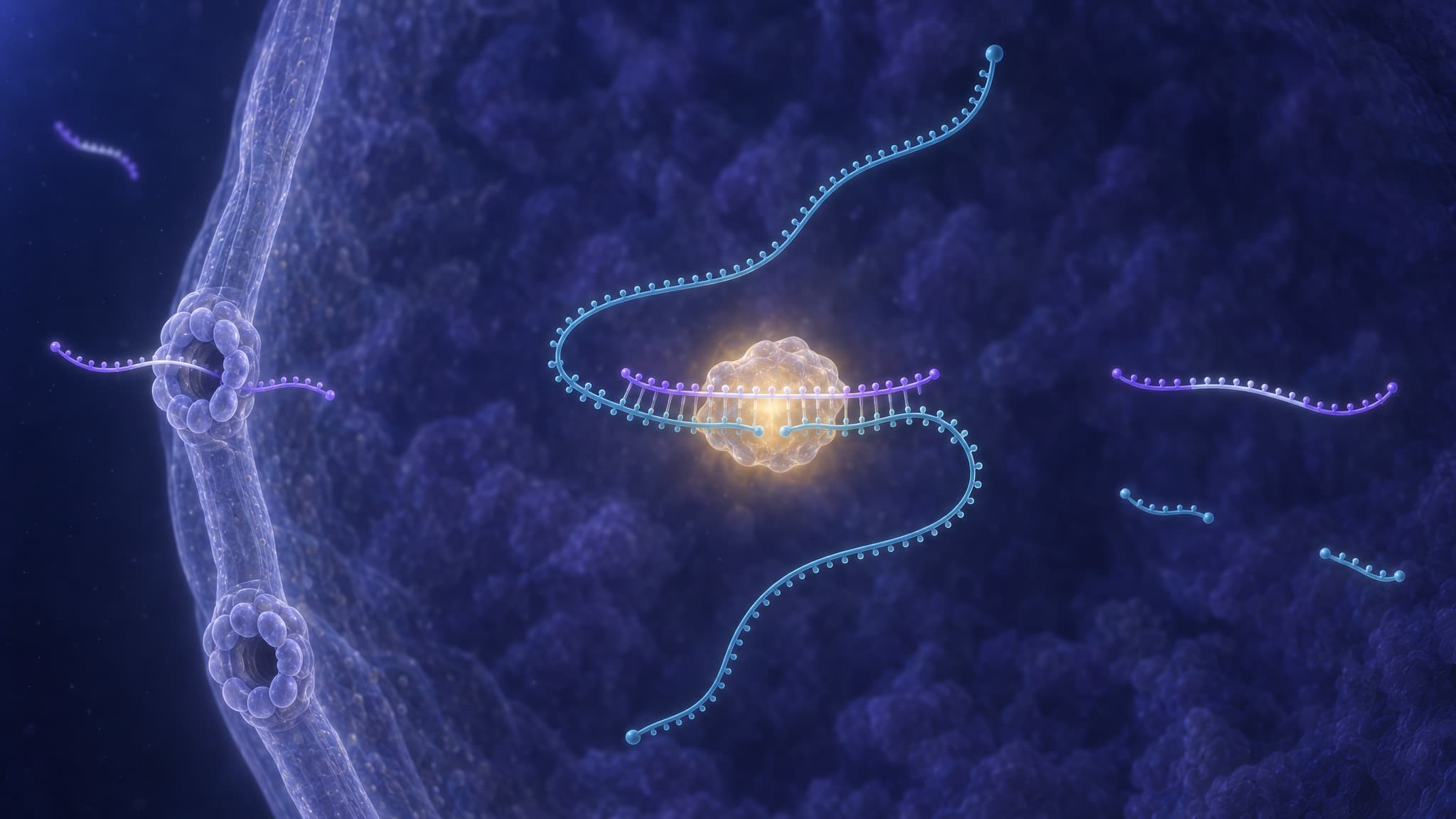
Self-delivery and nuclear uptake: AUMlnc
- Stage 1
AUMlnc
sdASOs do not require any transfection reagent to get inside cells. They are taken up by endocytosis and reach the nucleus as well as the cytoplasm. - Stage 2
AUMlnc
sdASOs typically hybridize to the lncRNA along stretches of sequence that are accessible. Once hybridized, they form an ASO–lncRNA duplex. - Stage 3
The DNA-like characteristics of AUMlnc
sdASOs trigger RNase H1 to recognize the duplex and cleave the RNA strand. This leads to degradation of the lncRNA.
Applications
Applications and use cases
Function of a new lncRNA
A new lncRNA is often found by RNA sequencing or in a CRISPR screen. AUMlnc
sdASO knocks it down, and the phenotype of the knockdown is screened. lncRNA in cis effects
Some lncRNAs regulate neighboring genes on the DNA (e.g., by recruiting chromatin modifiers). Using AUMlnc
sdASO to degrade the lncRNA can test whether the presence of the RNA (not the act of transcription alone) is required for that regulation. Target validation in disease models
A growing number of lncRNAs are being implicated in diseases. AUMlnc
sdASO is used in disease models, to see what silencing the lncRNA does. Chromatin and nuclear body analysis
AUMlnc
sdASO is designed against an architectural lncRNA, such as NEAT1 for paraspeckles or MALAT1 for nuclear speckles. The effect of its loss on nuclear structure is then assessed.
Every compatible cell type, 3D model, organoid and in vivo route, with the in vitro workflow.
See where it worksExperimental considerations
The recommended working range for AUMlnc
Where an AUMlnc
In the literature
AUMlnc
Harshe et al. · Nature Communications · 2020
Endogenous antisense RNA curbs CD39 expression in Crohn’s disease
Self-delivering AUMsilence sdASOs against an antisense long non-coding RNA at the CD39 locus restored CD39 in Crohn's disease T cells and lowered disease activity, histology score and colon shortening in humanized mice.
Nath et al. · Proceedings of the National Academy of Sciences · 2019
Discovering long noncoding RNA predictors of anticancer drug sensitivity beyond protein-coding genes
AUMlnc sdASOs against EGFR-AS1 and MIR205HG, added straight to the medium of two human lung cancer lines, slowed growth and shifted the EGFR isoform ratio, turning two computationally predicted erlotinib biomarkers into functional ones.
At the bench
Protocol, controls and what arrives
Add to culture medium or inject in vivo. The protocol, the controls and the How much to order page are written for this product.
- Lead time
- 10-14 business days
- Shipping
- Products are shipped lyophilized, with priority shipping within the United States and international priority shipping elsewhere.
- Quality control
- Every oligo is strictly controlled for quality and is manufactured in an ISO 9001:2015 certified facility.
Order AUMlnc
Sequences are designed using the AUMsilence platform. Our scientific team is available before ordering to discuss the target and the cell type.
For research use only. Not for use in diagnostic or therapeutic procedures.