

miRNA mimic oligos
AUMmimic
Self-delivering antisense oligonucleotides for microRNA replacement
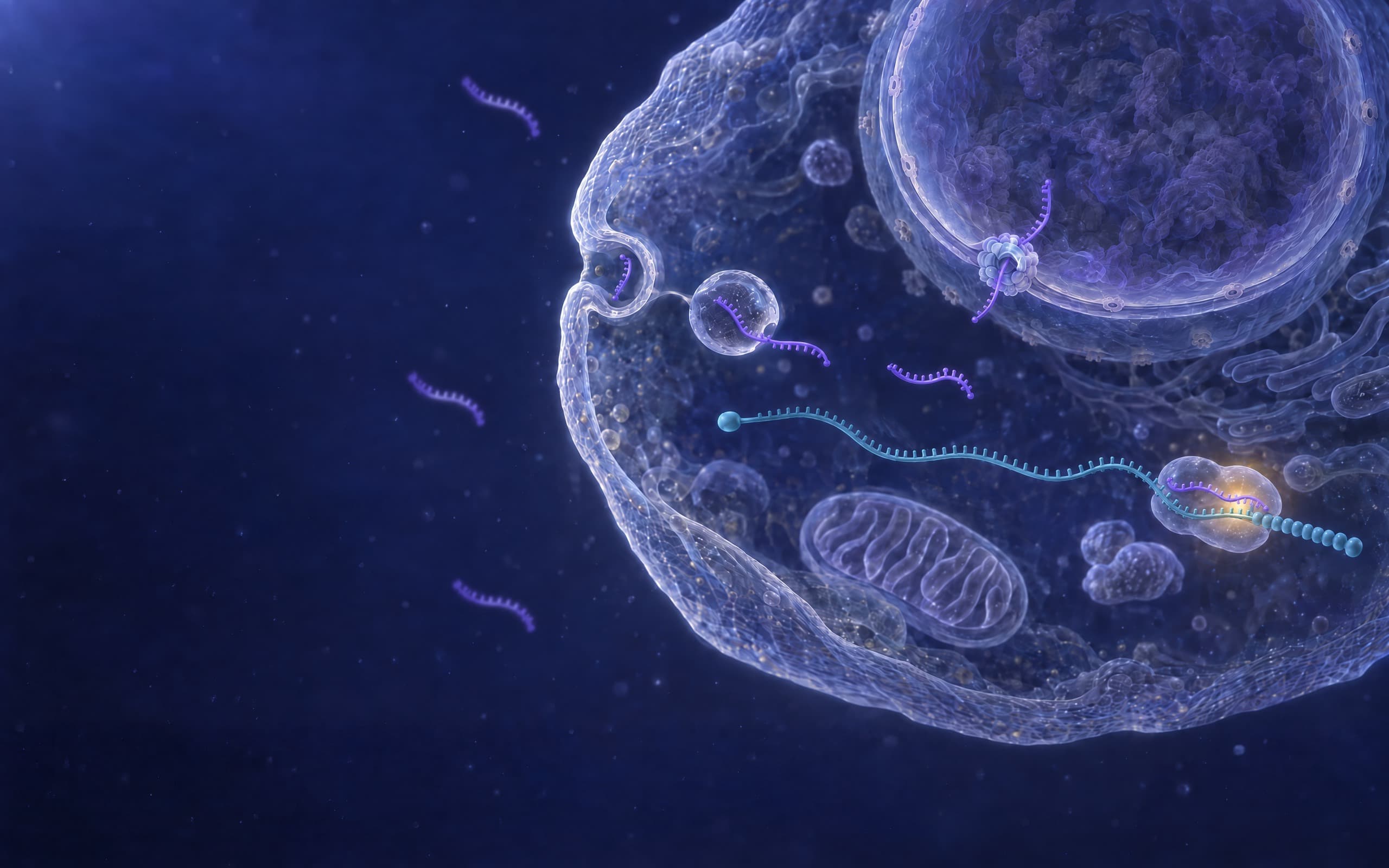
AUMmimic
Many of the primary cells and disease-relevant models in which a microRNA is replaced are difficult to transfect with conventional methods. Transfection reagents, electroporation, or viral vectors can introduce toxicity, alter the cellular response, or require additional optimization. Built on the same AUMsilence platform as our other products, AUMmimic
- No transfection required
As with every self-delivering product, no transfection reagents, electroporation, or viral vectors are needed: add AUMmimic
sdASO to the culture medium, or inject it in an animal model with no nanoparticle or viral delivery. - The counterpart of AUMantagomir
sdASO AUMantagomir
sdASO inhibits a mature microRNA; AUMmimic sdASO supplies one. - One mimic per mature microRNA
The two arms of a hairpin are different microRNAs, so a mimic is made against one of them and is named with its arm: miR-21-5p or miR-21-3p, never miR-21.
- Two purifications, one labeled version
Which purification you need is set by the study: RPC for in vitro, cellular studies, and HPLC for in vivo, animal studies.
Sizes and purification
- RPC
- 10 · 25 · 50 · 100 nmol
- HPLC
- 25 · 50 · 100 nmol
- Labeled, HPLC
- 25 nmol · FAM, Cyanine 3, Cyanine 5, Cyanine 7
One designed sequence per mature microRNA. The scramble, positive and labeled scramble controls of the self-delivering class are offered on the order page.
Prices and lead time are shown on the order page. Custom sizes by quote.
At a glance
- Class
- Self-delivering antisense (sdASO)
- Targets
- miRNA mimic
- Delivery
- Add to culture medium or inject in vivo.
- Fluorescent label
- FAM, Cyanine 3, Cyanine 5 or Cyanine 7
In the lab
The protocol in four steps
No protocol page is written for this product yet: the steps below are the AUMsilence
Step 1
Cell preparation
Plate cells in their optimum growth medium at a density appropriate for the cell type. A confluency of 50-70% at the time of treatment is typical.
Step 2
AUMsilence
sdASO stock preparation Prepare AUMsilence
sdASO stock solution by reconstituting lyophilized ASOs at the desired concentration. If you already have a stock solution prepared, skip to Step 3. Step 3
AUMsilence
sdASO delivery to cells Add AUMsilence
sdASO to the cells at the desired final concentration. The recommended working range is 5-20 μM, with a starting concentration of 10 μM. Step 4
Incubation and analysis
Incubate cells with AUMsilence
sdASO and analyze knockdown at appropriate time points. Knockdown is typically observed 24 to 72 hours after treatment, depending on the cell type and the target gene. Longer time points may be required in some systems. Protein knockdown can also be observed from 24 hours after treatment. Where the target protein is long-lived, existing protein must first turn over, so a later time point may be required.
In vitro, the four steps
Step 1
Prepare cells
Seed the cells in a 24-well plate; the oligonucleotide waits in solution.
Step 2
Add to the medium
Add the self-delivering oligonucleotide straight to the medium: no transfection reagent, no carrier.
Step 3
Incubate
Incubate at 37 degrees C in 5% carbon dioxide, humidified, for the exposure time.
Step 4
Quantify knockdown
Measure the knockdown: RT-qPCR, immunoblot, flow cytometry.
Schematic of the three readouts, not data.
Sources
- The pictures are the object pictures of AUM BioTech's workflow slide, rendered views of the objects on a white ground; none is a photograph of an experiment and none records a measurement.
- Tile 04 is a schematic of the three readouts, not data: the two conditions are drawn with a modest difference to show what each readout is, and no magnitude is asserted.
Why
Features of AUMmimic
No transfection required
As with every self-delivering product, no transfection reagents, electroporation, or viral vectors are needed: add AUMmimic
sdASO to the culture medium, or inject it in an animal model with no nanoparticle or viral delivery. The counterpart of AUMantagomir
sdASO AUMantagomir
sdASO inhibits a mature microRNA; AUMmimic sdASO supplies one. Both are self-delivering, so the two directions of a microRNA experiment, inhibition and replacement, run in the same format. One mimic per mature microRNA
The two arms of a hairpin are different microRNAs, so a mimic is made against one of them and is named with its arm: miR-21-5p or miR-21-3p, never miR-21. This product is sold as a single designed sequence per target, in human, mouse or rat.
Two purifications, one labeled version
Which purification you need is set by the study: RPC for in vitro, cellular studies, and HPLC for in vivo, animal studies. A fluorescently labeled version, AUMmimiclab
sdASO, is ordered to monitor cellular uptake; the sizes and the dyes of both are listed with the order form.
Mechanism
Mechanism of action
Self-delivery: Like our other self-delivering products, AUMmimic
Replacement: An AUMmimic
Design: The AUMsilence platform designs the sequence from the name it is given, and the name has to be exact, because the arm decides which sequence is made. The name is miR or let, the number and the arm, as in miR-21-5p. The species control supplies the species prefix, hsa, mmu or rno, so the name is written without it.
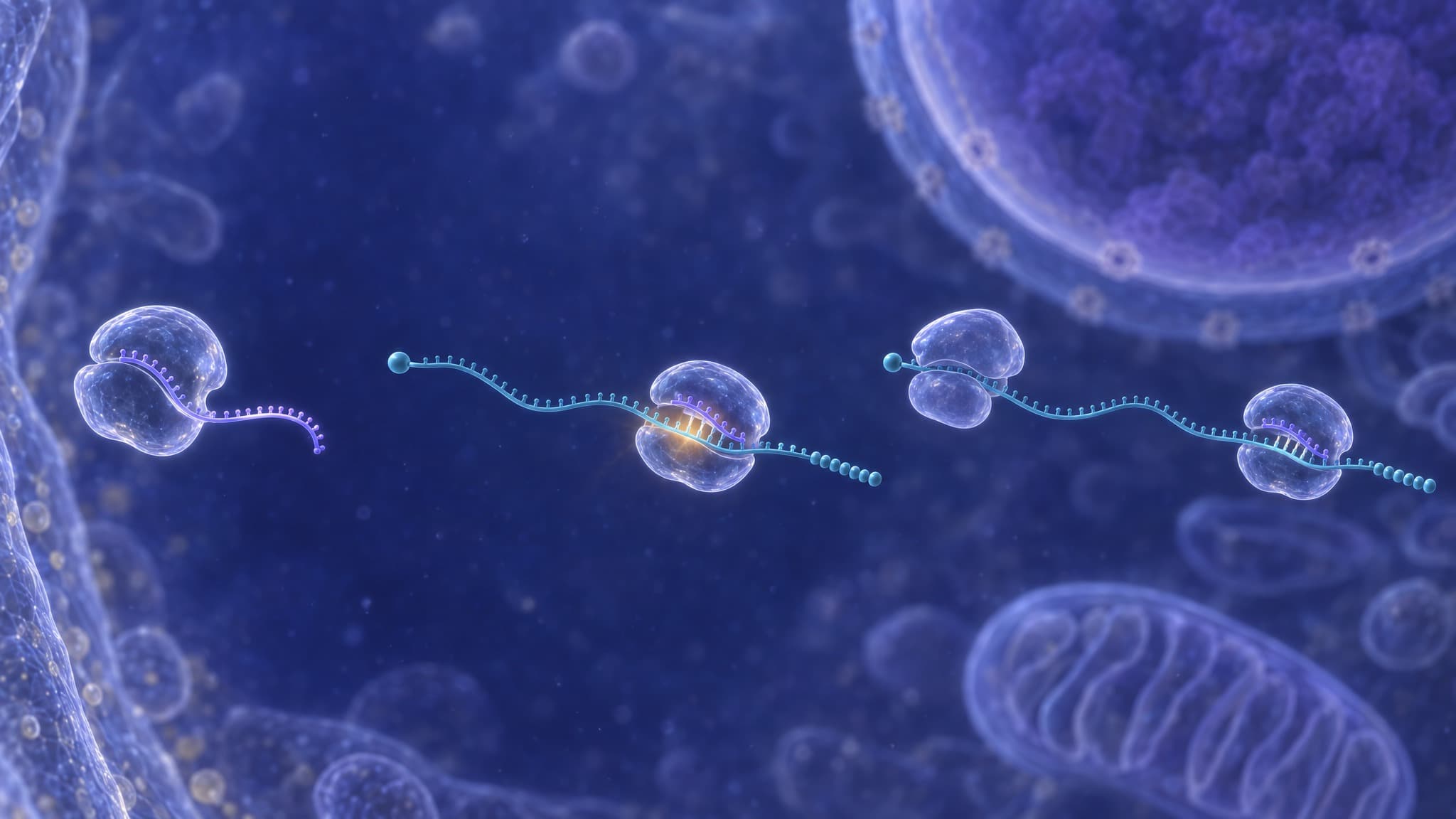
- Stage 1
Like our other self-delivering products, AUMmimic
sdASOs enter cells without a transfection reagent. - Stage 2
An AUMmimic
sdASO stands in for the mature microRNA it is designed against. - Stage 3
It supplies that microRNA's activity, so the microRNA's targets are regulated as the natural microRNA regulates them.
Applications
Applications and use cases
Restoring a microRNA
Where a microRNA is lost or reduced in a model, supply it with AUMmimic
sdASO and read the outcome: the replacement arm of a microRNA study. Inhibition and replacement, side by side
Pair AUMmimic
sdASO with AUMantagomir sdASO against the same mature microRNA to read its function from both directions, in the same self-delivering format. Difficult-to-transfect cells
Self-delivering antisense oligonucleotides are used where transfection can fail (e.g., primary cells, neurons and immune cells). AUMmimic
sdASO is added to the medium in the same way, with no delivery step. In vivo
HPLC purification is the grade for in vivo, animal studies. Self-delivering antisense oligonucleotides are dissolved in a buffer such as phosphate-buffered saline (PBS) or saline and injected, with no nanoparticle or viral delivery.
Every compatible cell type, 3D model, organoid and in vivo route, with the in vitro workflow.
See where it worksExperimental considerations
The working concentration is higher than that of a transfected oligonucleotide. The recommended working range for AUMmimic
At the bench
Controls and what arrives
Add to culture medium or inject in vivo. The controls and the How much to order page are written for this product.
- Lead time
- 10-14 business days
- Shipping
- Products are shipped lyophilized, with priority shipping within the United States and international priority shipping elsewhere.
- Quality control
- Every oligo is strictly controlled for quality and is manufactured in an ISO 9001:2015 certified facility.
Related
Related products
Order AUMmimic
Name the mature microRNA with its arm and choose the species; the AUMsilence platform designs the sequence, and the price is on the order page.
For research use only. Not for use in diagnostic or therapeutic procedures.