

Cost-effective antisense, optimized for transfection
AUMsilence
AUMsilence
Transfection-optimized antisense oligonucleotides are built on the core strengths of the AUMsilence platform – specificity and stability – with chemical modifications calibrated for transfection protocols.
- Cost-effective for large experiments
AUMsilence
toASO is the AUMsilence sdASO design at a lower price, which makes it the choice for high-throughput studies or when budget is limited. - Flexible ordering options
Choose between Individual toASOs for targeted gene silencing or a Pool of 4 toASOs.
- Knockdown through RNase H1
AUMsilence
toASOs knock down the target RNA by RNase H1 cleavage, as AUMsilence sdASOs do. - High specificity, low off-target
AUMsilence
toASOs are sequence-specific, like our other products.
Sizes and purification
- RPC
- 2 · 5 · 10 · 25 nmol
- HPLC
- 2 · 5 · 10 · 25 nmol
Pools of four sequences against one target are available at 2, 5, 10 and 25 nmol per oligo (8, 20, 40 and 100 nmol in total).
Prices and lead time are shown on the order page. Custom sizes by quote.
At a glance
- Class
- Transfection-optimized antisense (toASO)
- Targets
- mRNA
- Delivery
- Deliver with a standard transfection reagent.
- Fluorescent label
- None on the target-specific oligo; labeled scramble controls in FAM, Cyanine 3, Cyanine 5 and Cyanine 7.
In the lab
The protocol in four steps
The steps below are the AUMsilence
Step 1
Cell preparation
Plate cells in their optimum growth medium at a density appropriate for the cell type. A confluency of 50-70% at the time of transfection is typical.
Step 2
AUMsilence
toASO stock preparation Prepare AUMsilence
toASO stock solution by reconstituting lyophilized ASOs at the desired concentration. If you already have a stock solution prepared, skip to Step 3. Step 3
Transfection method selection
AUMsilence
toASO can be delivered using various transfection methods. Choose the most appropriate method for your cell type and experimental needs. Step 4
Analysis of knockdown efficiency
Evaluate the knockdown efficiency of AUMsilence
toASO at appropriate time points post-transfection.
Why
Features of AUMsilence
Cost-effective for large experiments
AUMsilence
toASO is the AUMsilence sdASO design at a lower price, which makes it the choice for high-throughput studies or when budget is limited. A screen across dozens or hundreds of genes is the same approach at that price per oligonucleotide. Flexible ordering options
Choose between Individual toASOs for targeted gene silencing or a Pool of 4 toASOs. Our pool option provides 4 different toASO sequences targeting the same gene in one order.
Knockdown through RNase H1
AUMsilence
toASOs knock down the target RNA by RNase H1 cleavage, as AUMsilence sdASOs do. The combination of DNA-like and modified regions ensures they activate RNase H1 well and bind strongly. High specificity, low off-target
AUMsilence
toASOs are sequence-specific, like our other products. They do not involve the RNA-induced silencing complex (RISC), so microRNA-like off-targeting does not occur. Any off-target would require a significant complementary match to the ASO itself, which our AI-driven design avoids by scanning the transcriptome. Stable and nuclease-resistant
AUMsilence
toASOs are resistant to degradation by serum and cellular nucleases, because they keep the phosphorothioate backbone. Multiple size options
AUMsilence
toASOs are available in 2, 5, 10, and 25 nmol, from a pilot study at 2 nmol to a large-scale experiment at 25 nmol, in RPC or HPLC purification.
Mechanism
Mechanism of action
RNase H1-mediated knockdown: AUMsilence
Requirement for delivery reagent: Unlike AUMsilence
Design and AI optimization: AUMsilence
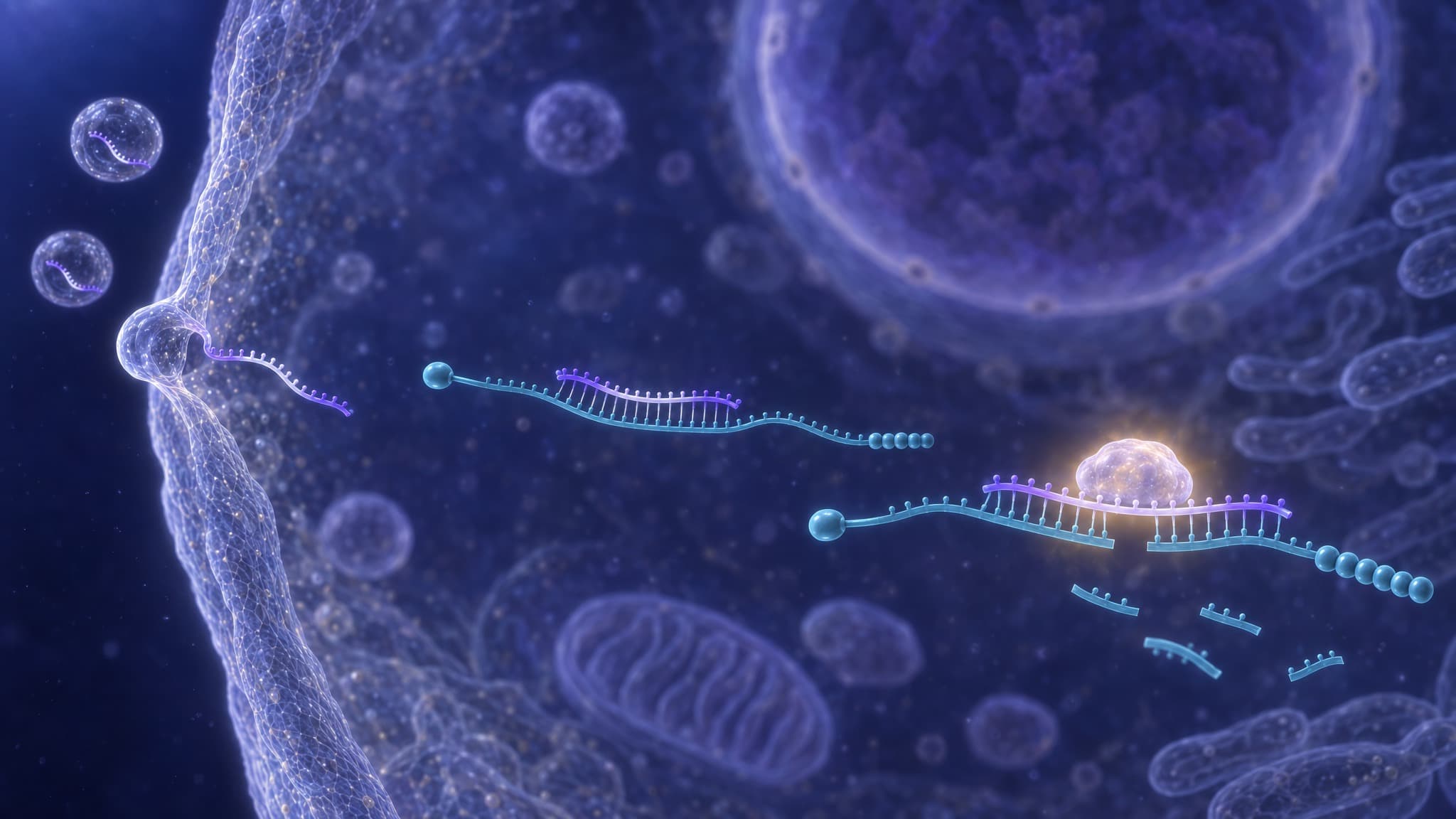
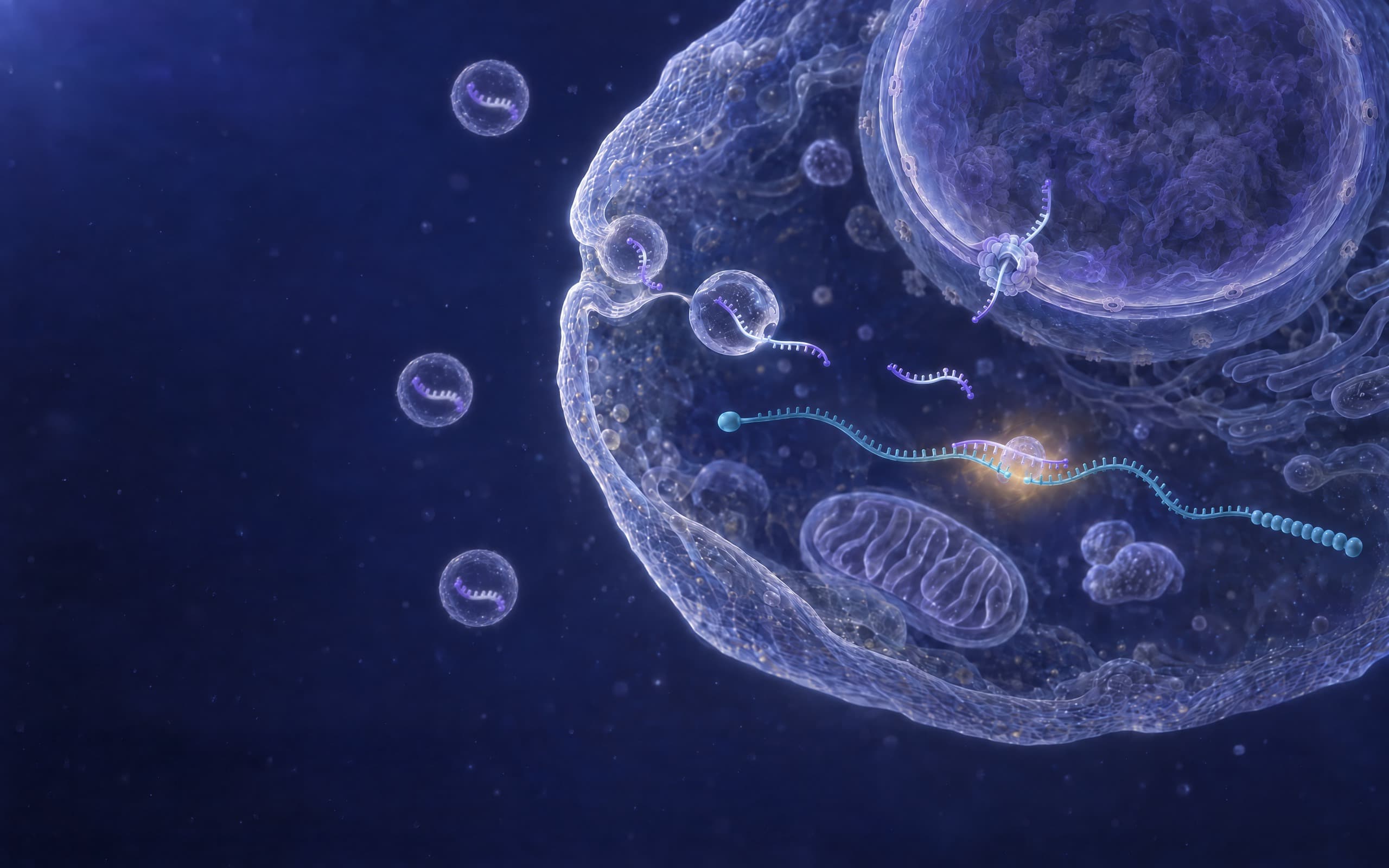
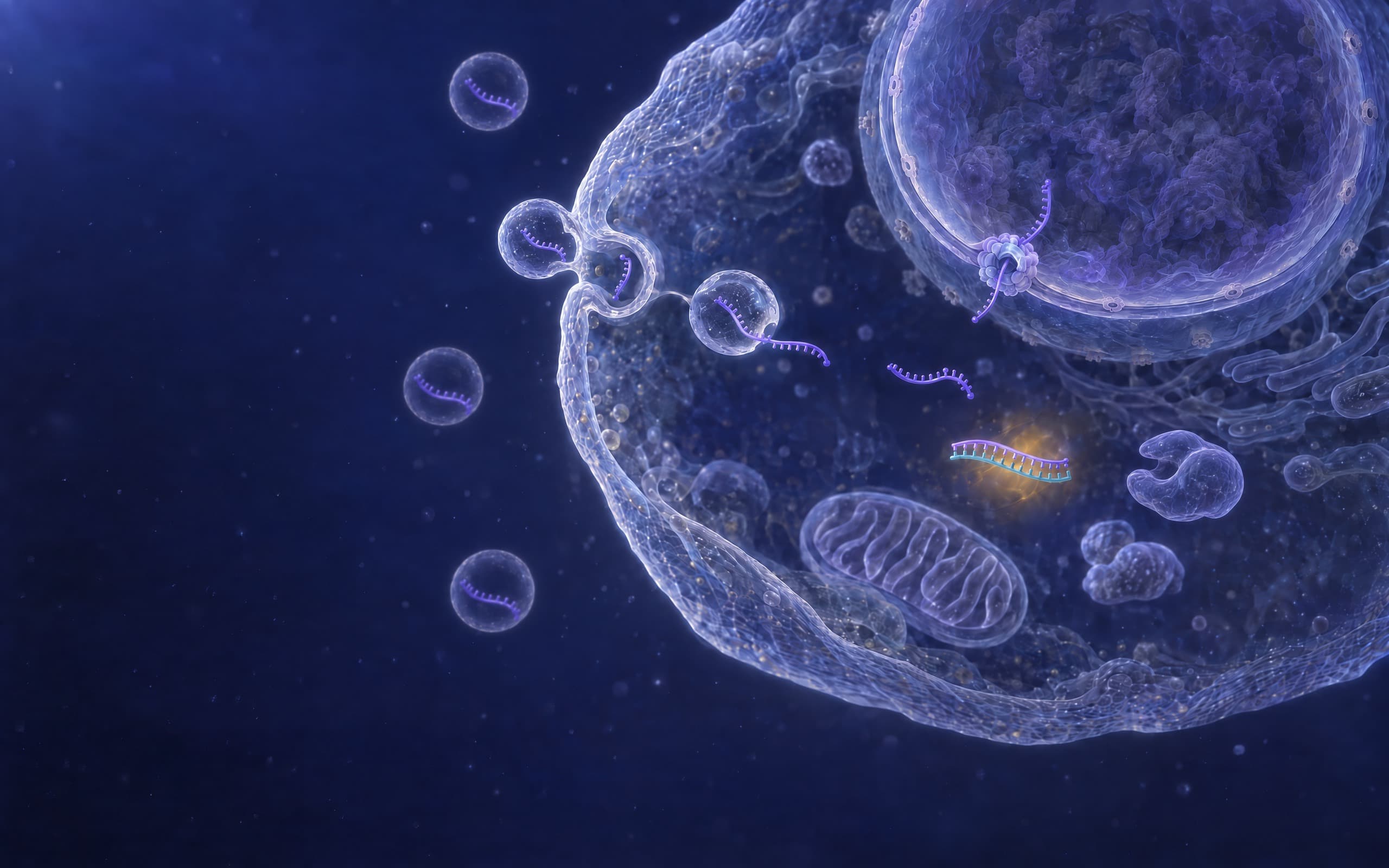
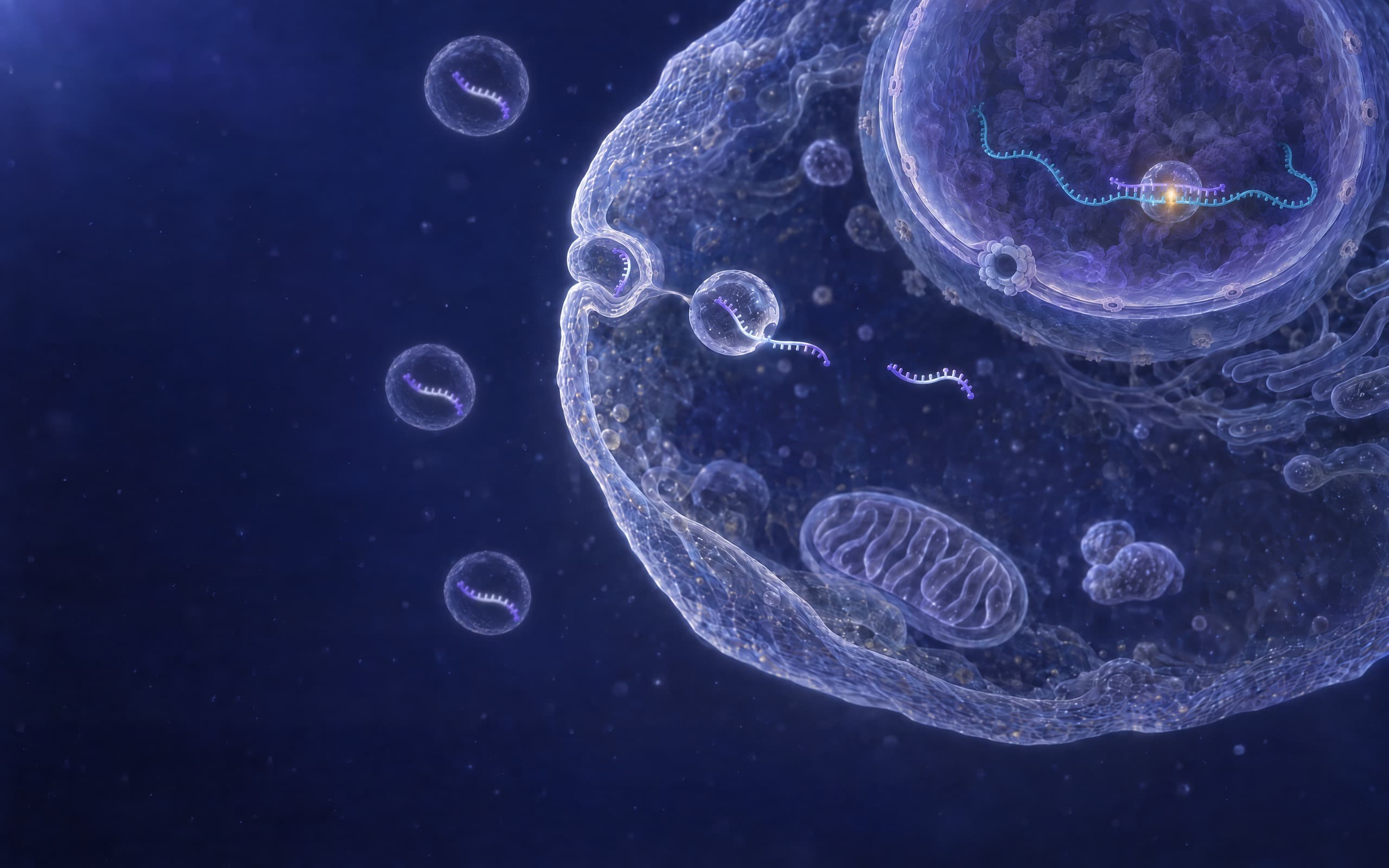
- Stage 1
The AUMsilence
toASO is mixed with a lipid nanoparticle or other carrier that facilitates its entry into cells. - Stage 2
Once delivered into the cell (via a transfection reagent), AUMsilence
toASOs reach the nucleus and cytoplasm and seek out the target RNA. - Stage 3
AUMsilence
toASOs bind to target RNA and induce RNase H1 to cleave it.
Applications
Applications and use cases
High-throughput gene knockdown screens
AUMsilence
toASO is used for a screen across many genes (for example, a custom panel of 100 genes related to a pathway, to see which affects a phenotype). Plate cells in 96-well plates, transfect AUMsilence toASOs targeting each gene (plus controls), and read out effects. Routine gene silencing in easy-to-transfect cells
In cell lines like HeLa, HEK293, or other cancer cell lines that transfect with high efficiency, self-delivery is not needed. AUMsilence
toASO is delivered to these cells with a standard transfection reagent. Education and training
AUMsilence
toASO is used in academic teaching labs and in training students in gene silencing techniques, where budget is a concern. Students learn the antisense mechanism by transfecting cells with AUMsilence toASO and assessing gene knockdown. Pilot experiments
AUMsilence
toASO is a first use of the AUMsilence platform at small scale: order it for the gene and test it with the transfection reagent already in use, in the assay already in use. The same target is then studied in primary cells or in vivo with AUMsilence sdASO, whose sequence can be the same.
Every compatible cell type, 3D model and organoid with the in vitro workflow, and in vivo with a delivery system.
See where it worksExperimental considerations
A transfection reagent is needed, and transfection reagents can introduce toxicity, alter the cellular response, or require additional optimization. In difficult-to-transfect cells, and in vivo without a carrier or formulation, AUMsilence
The recommended working range for AUMsilence
Ordering options
Individual toASO
Perfect for targeted experiments
- 2 nmol: Pilot studies
- 5 nmol: Standard size
- 10 nmol: Extended studies
- 25 nmol: Scale-up
Pool of 4 toASO
Four sequences against one target
- 2 nmol × 4: 4 sequences, pilot
- 5 nmol × 4: 4 sequences, standard
- 10 nmol × 4: 4 sequences, extended
- 25 nmol × 4: 4 sequences, scale-up
The toASO range
Three products and their controls, every one ordered from this page. Sizes are the delivered nmol. A pool of four is four sequences against one target at the stated amount per oligo.
| Product | RPC | HPLC | Pool of four, RPC, per oligo | Labeled, HPLC |
|---|---|---|---|---|
| AUMsilence | 2, 5, 10, 25 nmol | 2, 5, 10, 25 nmol | 2, 5, 10, 25 nmol | |
| AUMantagomir | 2, 5, 10, 25 nmol | 2, 5, 10, 25 nmol | 2, 5, 10, 25 nmol | |
| AUMlnc | 2, 5, 10, 25 nmol | 2, 5, 10, 25 nmol | 2, 5, 10, 25 nmol | |
| AUMscramble | 2, 5, 10, 25 nmol | 2, 5, 10, 25 nmol | 10 nmol, FAM, Cyanine 3, Cyanine 5, Cyanine 7 | |
| AUMposctrl | 2, 5, 10, 25 nmol | 2, 5, 10, 25 nmol |
Product comparison
| AUMsilence | AUMsiRNA | AUMsilence | |
|---|---|---|---|
| Delivery method | Requires transfection | Requires transfection | Self-delivering |
| Best for | Budget-conscious screening | RNA interference studies | Primary cells and in vivo |
| Pool option | ✓ Pool of 4 | ✓ Pool | Individual only |
| Mechanism | RNase H1 | RISC/Ago2 | RNase H1 |
| In vivo studies | Requires carrier or formulation | Requires carrier or formulation | Direct injection |
At the bench
Protocol and what arrives
Deliver with a standard transfection reagent. The protocol and the How much to order page are written for this product.
- Lead time
- 10-14 business days
- Shipping
- Products are shipped lyophilized, with priority shipping within the United States and international priority shipping elsewhere.
- Quality control
- Every oligo is strictly controlled for quality and is manufactured in an ISO 9001:2015 certified facility.
Order AUMsilence
Order your custom AUMsilence
For research use only. Not for use in diagnostic or therapeutic procedures.