

Protocol
AUMsilence V+
In vitro protocol for viral RNA targeting with self-delivering antisense oligonucleotides
AUMsilence V+
Protocol overview
- 01Plate cells at optimal density and infect with virus (if cells are not already infected)
- 02Add AUMsilence V+
sdASO directly to culture medium - 03Incubate and analyze viral inhibition (typically 24-72 hours after treatment)
This protocol can be adapted for different cell types, viral systems, and various culture vessel formats, from 96-well plates to larger culture vessels.
Key advantages
- No transfection required: Add to media (no lipofection, electroporation, or viral vectors needed)
- Viral-specific design: Optimized to target conserved regions of viral genomes
- Dual mechanism: Acts through RNase H1-mediated degradation and/or steric blocking of viral RNA function
- Works in infected cells: Maintains efficacy even in virus-infected cells where other methods may be compromised
Materials and reagents
Required items
- AUMsilence V+
sdASO (lyophilized or stock solution) - Appropriate cell culture medium
- Culture plates or vessels
- Mammalian cells susceptible to virus of interest
- Viral stock (if conducting infection during the experiment)
- Sterile nuclease-free water or buffer (for ASO resuspension)
- Microcentrifuge tubes (for aliquoting ASO stock)
- Standard cell culture equipment:
- Sterile pipettes and tips
- Cell culture hood
- Humidified cell culture incubator
- Centrifuge
- Appropriate viral detection reagents (depending on your readout system):
- qRT-PCR primers for viral RNA
- Antibodies for viral proteins (Western blot or immunofluorescence)
- Viral titer assay materials (e.g., plaque assay components)
Detailed protocol
Step 1: Cell preparation and viral infection
Plate cells in their optimum growth medium at appropriate density for your cell type and viral system.
- For pre-infection treatment: Plate cells the day before, at a seeding density that brings them to 50-70% confluency by the time they are treated. Allow cells to adhere overnight, then add AUMsilence V+
sdASO (Step 3) prior to viral infection. - For post-infection treatment: Plate cells, allow adherence, then infect with your virus of interest according to established protocols. After the desired infection period (typically when viral replication begins), proceed to Step 3 to add AUMsilence V+
sdASO. - For persistently infected cells: Plate chronically infected cells at 50-70% confluency and proceed directly to Step 3.
Note: The optimal cell density may vary depending on the viral system used.
- For pre-infection treatment: Plate cells the day before, at a seeding density that brings them to 50-70% confluency by the time they are treated. Allow cells to adhere overnight, then add AUMsilence V+
Step 2: AUMsilence V+
sdASO stock preparation Prepare AUMsilence V+
sdASO stock solution by reconstituting lyophilized ASOs at the desired concentration. If you already have a stock solution prepared, skip to Step 3. - Resuspend lyophilized AUMsilence V+
sdASO using the appropriate volume of sterile nuclease-free water or buffer to achieve the desired stock concentration (typically 1 mM). - Pipette the solution up and down 3-5 times while avoiding the introduction of bubbles.
- Let the vial sit at room temperature for 5-10 minutes to ensure complete resuspension.
- Centrifuge for 30-45 seconds to collect the solution at the bottom of the tube.
- Prepare several aliquots of the stock solution to avoid multiple freeze-thaw cycles.
Important: To avoid degradation, minimize freeze-thaw cycles of your ASO stock. It is strongly recommended to make single-use aliquots of your stock solution and store them at -20°C.
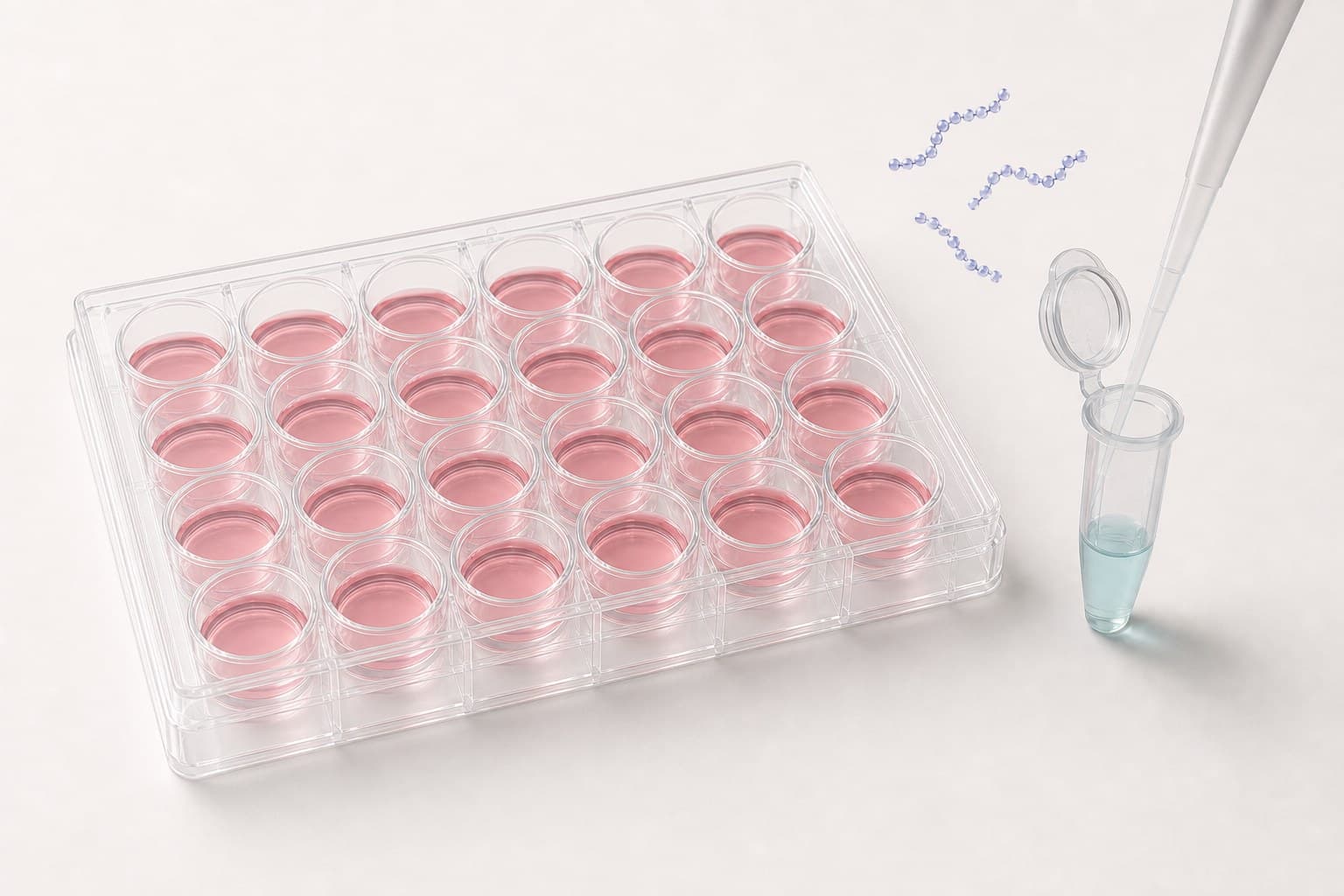
Cells seeded, here in a 24-well plate; the oligonucleotide waits in solution. - Resuspend lyophilized AUMsilence V+
Step 3: AUMsilence V+
sdASO delivery to cells Add AUMsilence V+
sdASO to the cells at the desired final concentration. The recommended working range is 5-20 μM, with a starting concentration of 10 μM. The optimal concentration varies with the target gene, the RNA class (messenger RNA, microRNA or long non-coding RNA) and the cell type, and should be determined by titration for each system. - For adherent cells: Either aspirate the growth media and overlay cells with fresh media containing AUMsilence V+
sdASO, or add the ASO stock directly to the media overlaying the cells. Mix gently. - For suspension cells: Either pellet the cells by low-speed centrifugation and gently resuspend the cell pellet in media containing AUMsilence V+
sdASO, or add the ASO stock directly to the media containing the cells. Mix gently. - It is highly recommended to perform a dose response using the three concentrations of the range (5 μM, 10 μM and 20 μM) to determine the optimal concentration for your specific viral target.
- For viral RNA targeting, you may include multiple AUMsilence V+
sdASO designed against different conserved regions of the viral genome to enhance efficacy and reduce the likelihood of viral escape.
Optimization tip: When targeting viral RNA, starting at 10 μM and moving up may be more effective, especially for viruses with high replication rates or abundant transcripts. For pre-infection treatment, lower concentrations may be sufficient.
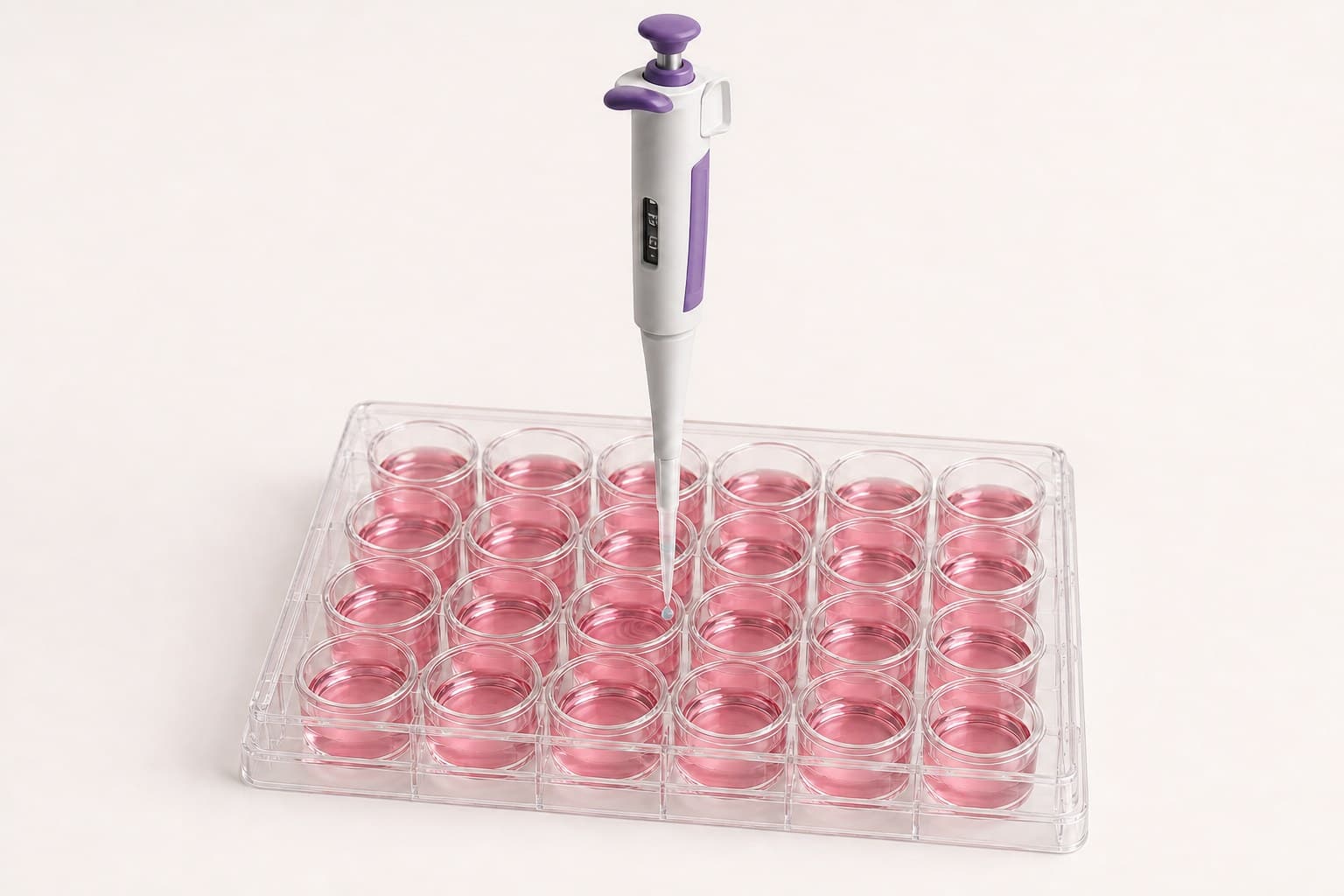
Add the self-delivering oligonucleotide straight to the medium: no transfection reagent. - For adherent cells: Either aspirate the growth media and overlay cells with fresh media containing AUMsilence V+
Step 4: Incubation and analysis
Incubate cells with AUMsilence V+
sdASO and analyze viral inhibition at appropriate time points. - Return cells to the incubator and maintain under standard culture conditions appropriate for your viral system.
- Analyze AUMsilence V+
sdASO-treated cells after the desired time point, typically 24-72 hours post-treatment. The optimal timepoint will depend on the viral replication cycle. - Viral inhibition can be assessed by various methods:
- Measuring viral RNA levels (qRT-PCR)
- Detecting viral protein levels (Western blot, ELISA, immunofluorescence)
- Quantifying infectious virus production (plaque assay, TCID50, etc.)
- Observing virus-induced cytopathic effects (CPE)
Note: For viruses with rapid replication cycles, earlier timepoints (12-24 hours) may be appropriate. For slower-replicating viruses, later timepoints (48-96 hours) may be needed to observe significant inhibition effects. Monitoring multiple timepoints is recommended for initial optimization.
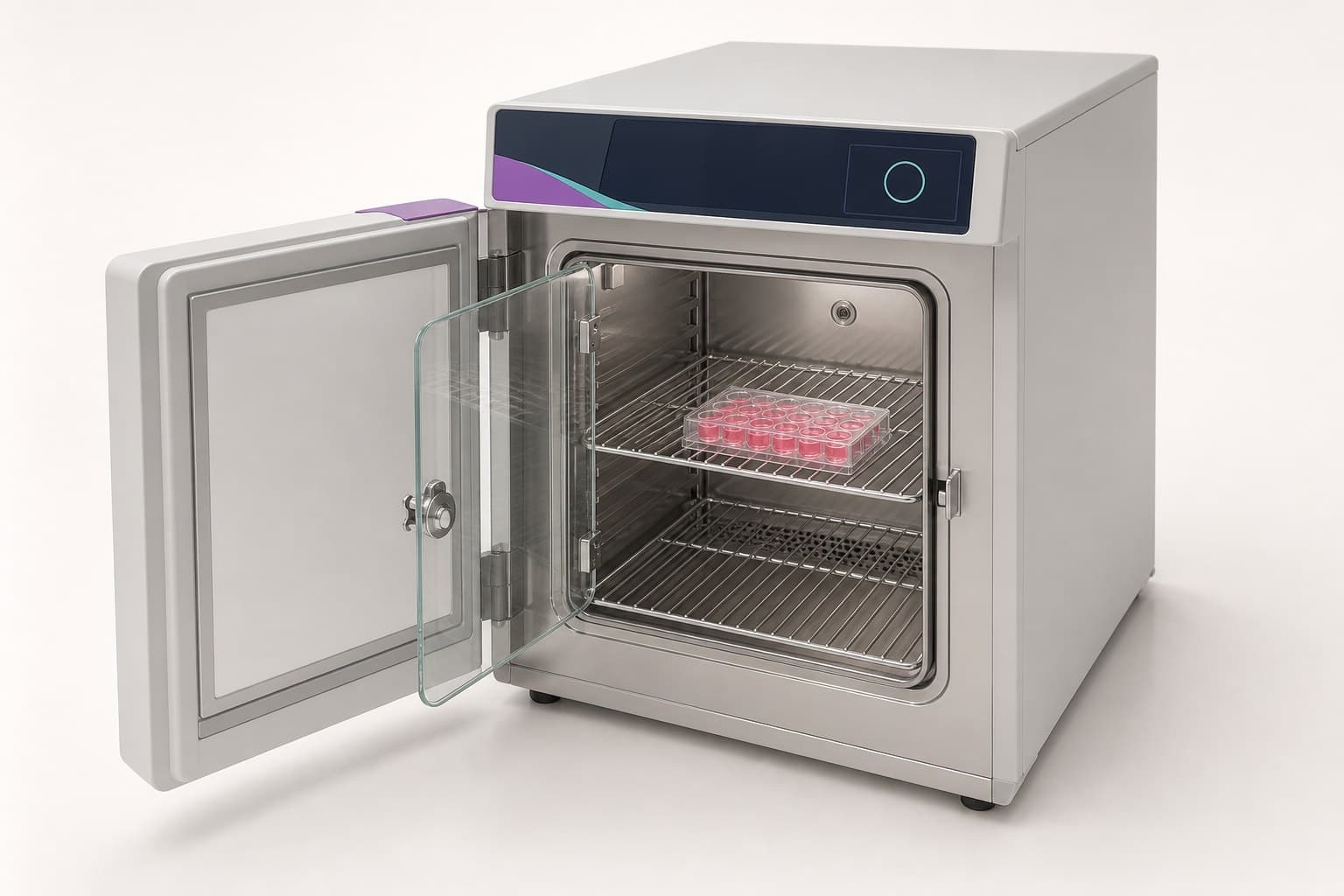
Return the plate to the humidified incubator under standard culture conditions for your viral system, typically 24-72 hours.
Reference calculations
Making the stock
Reconstitute the vial in nuclease-free water to 1 mM (1 μL per nmol, so 25 μL for a 25 nmol vial). For a 100 μM stock, add 10 μL per nmol.
| Vial | For 1 mM | For 100 μM |
|---|---|---|
| 10 nmol | 10 μL | 100 μL |
| 25 nmol | 25 μL | 250 μL |
| 50 nmol | 50 μL | 500 μL |
| 100 nmol | 100 μL | 1 mL |
Adding the stock to the well
Add the 1 mM stock to the well at 1:200 for 5 μM, 1:100 for 10 μM and 1:50 for 20 μM. At 10 μM that is 1 μL per 100 μL of medium.
| Plate | Medium in the well | 5 μM | 10 μM | 20 μM |
|---|---|---|---|---|
| 96-well | 100 μL | 0.5 μL | 1 μL | 2 μL |
| 48-well | 250 μL | 1.25 μL | 2.5 μL | 5 μL |
| 24-well | 500 μL | 2.5 μL | 5 μL | 10 μL |
| 12-well | 1 mL | 5 μL | 10 μL | 20 μL |
| 6-well | 2 mL | 10 μL | 20 μL | 40 μL |
Treatments per vial
At 10 μM, a 25 nmol vial treats 25 wells of a 96-well plate, 5 of a 24-well plate or 2 of a 12-well plate. Counts are rounded down to whole wells. AUMsilence V+
| Plate | Medium in the well | 5 μM | 10 μM | 20 μM |
|---|---|---|---|---|
| 96-well | 100 μL | 50 | 25 | 12 |
| 48-well | 250 μL | 20 | 10 | 5 |
| 24-well | 500 μL | 10 | 5 | 2 |
| 12-well | 1 mL | 5 | 2 | 1 |
| 6-well | 2 mL | 2 | 1 | 0 |
Cell density at treatment
Add AUMsilence V+
Tips and troubleshooting for viral targeting
Optimization tips and best practices
Viral target selection
Timing considerations
Multiplicity of infection (MOI)
Controls
Troubleshooting common issues
Low viral inhibition
Cell cytotoxicity
Inconsistent results
Storage and additional information
Storage conditions
- AUMsilence V+
sdASO are shipped in lyophilized form. Upon arrival, store at -20°C. - Resuspended AUMsilence V+
sdASO should be stored in aliquots at -20°C to avoid multiple freeze-thaw cycles. - For short-term storage (up to 1 week), resuspended ASOs can be kept at 4°C.
Additional notes for viral research
- AUMsilence V+
sdASO are compatible with standard virus culture media, including those containing serum. - For BSL-2 or higher viral work, all appropriate biosafety procedures must be followed. AUMsilence V+
sdASO do not alter the biosafety requirements for your viral system. - When using fluorescently labeled AUMsilence V+
sdASO, consider potential spectral overlap with viral fluorescent reporters if using fluorescence-based detection methods.
Note
Common viral applications
RNA virus applications
- Positive-strand RNA viruses: Coronaviruses (SARS-CoV-2, MERS-CoV), flaviviruses (HCV, Zika, Dengue), picornaviruses (poliovirus, rhinovirus)
- Negative-strand RNA viruses: Influenza virus, respiratory syncytial virus (RSV), vesicular stomatitis virus (VSV)
- Retroviruses: HIV-1, HTLV-1
For these viruses, the regions AUM designs against include:
- Viral polymerase genes
- Conserved untranslated regions (UTRs)
- Essential structural genes
- Viral protease-encoding regions
DNA virus applications
- Herpesvirus family: HSV-1, HSV-2, CMV, EBV
- Hepadnaviruses: Hepatitis B virus (HBV)
- Papillomaviruses: HPV
For DNA viruses, the regions AUM designs against include:
- Immediate-early gene transcripts
- Essential regulatory proteins (e.g., HBx for HBV)
- Viral oncogenes (e.g., E6/E7 for HPV)
- Conserved regions in viral mRNAs
Application insight
Request a quote for AUMsilence V+
A scientist reviews the viral system, the conserved regions to target and the controls before an order is placed.
For research use only. Not for use in diagnostic or therapeutic procedures.